
UT Austin Astronomers to Play Leading Role in NASA’s Newly Launched Roman Space Telescope
August 31, 2026
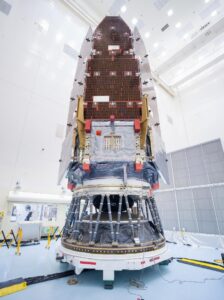
On August 30, the Nancy Grace Roman Space Telescope lifted off from Kennedy Space Center. Named for NASA’s first chief astronomer, Roman carries a mirror the size of Hubble’s but captures a field of view about 100 times wider, letting it survey enormous areas of sky at Hubble-class sharpness. Thanks to its unique view of the universe, use of the telescope is already highly coveted.
It is notable, therefore, that for its first years of observations, astronomers at The University of Texas at Austin won more resources to use the telescope than researchers at any other university in the country. Specifically, $3.6 million in grant funding to translate Roman data into tangible discoveries. Some of these discoveries are expected to come from UT Austin’s McDonald Observatory in West Texas, which can train its telescopes on Roman-identified objects to perform nuanced follow-up observations.
Over the full five-years of its primary mission, Roman will investigate dark energy, discover thousands of planets beyond our solar system, and map the growth of galaxies across cosmic time. It will do this through multiple Core Community Surveys, which comprise the bulk of Roman observations. Yet there is additional time available. Through a NASA-led competition, excess Cycle 1 time was awarded to five programs.
One of these will be led by UT Austin astronomer Adam Kraus. It will point the new telescope at a patch of sky astronomers know better than almost any other: the field surveyed by NASA’s Kepler mission.
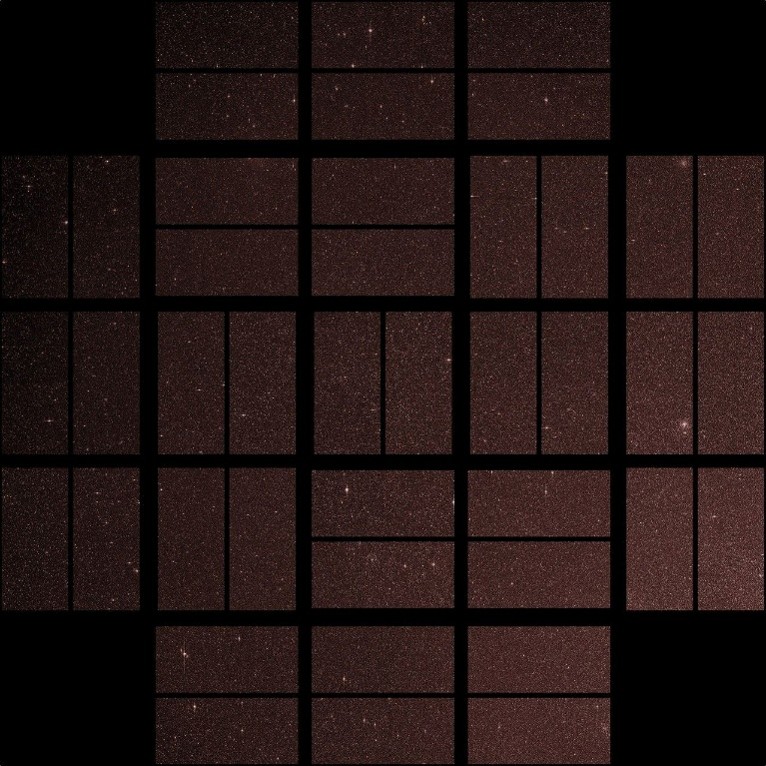
From 2009 to 2013, Kepler (which included several McDonald astronomers on its original mission team) stared at a single patch of the constellations Cygnus and Lyra, identifying more than 4,000 possible planets and rewriting what astronomers knew about how common planetary systems are. But it did so with blurry vision. Each Kepler pixel covered a swath of sky wide enough to blend multiple stars together, meaning some “planets” were never planets at all, and the true properties of many real ones remain uncertain.
To fill in these details, Kraus’s team will re-image all 200,000 Kepler target stars at far sharper resolution, separating close companion stars from their neighbors and measuring their colors and motions. The survey will take roughly 171 hours of Roman’s time and produce a public dataset the exoplanet community will draw on for years.
“Kepler told us that planets are incredibly common in the universe, but it couldn’t always tell us the actual properties of those planets,” said Kraus. “Roman can resolve what Kepler blurred together. We’re going back to the most scrutinized star field in the sky with exquisite resolution.”
Kraus’s program is one of six led by UT Austin researchers. The others are part of Roman’s General Investigator program, which funds crucial work interpreting the Core Community Surveys at the heart the telescope’s mission. Four of these come from members of the University’s Cosmic Frontier Center, which studies the universe’s earliest galaxies.
“While the James Webb Space Telescope has been a major focus of CFC research these past five years, it can only survey a small patch of the sky. So, we never know if we happen to be looking at a region especially rich with galaxies or a cosmic void,” said Steven Finkelstein, a professor of astronomy and the center’s director. “With Roman, we can survey very large regions, akin to taking a Google map view of your town and zooming out to the entire state.”
Finkelstein co-leads one of the UT Austin programs with fellow professor Julian Muñoz. They will use one of Roman’s Core Community Surveys (with an area 40 times larger than all of JWST’s legacy fields combined) to measure how many bright galaxies existed in the universe’s first billion years and how they were distributed, which current small-area surveys can’t pin down.
“Roman will revolutionize how we understand galaxies,” said Muñoz, “it will allow us to measure where they live on the large-scale structure of our universe, which directly tests our models of how they formed.”
For UT Austin Professor Sebastian Gomez, the selection caps a longer involvement with the mission. Gomez served on the committee that defined Roman’s High-Latitude Time-Domain Survey — the community body that decided how much telescope time the survey would get, which patches of sky it would monitor, and how often it would revisit them. Those recommendations set the survey Gomez will now use: his approved program will comb it for superluminous supernovae (the deaths of the universe’s most massive stars) and tidal disruption events (the bright flares that result from black holes shredding stars).
“It’s a very rewarding feeling to help design a survey and then get to use it,” said Gomez. “We spent a long time arguing about cadence and depth precisely so that rare, slow transients like these wouldn’t slip through the cracks. Now we get to find out what’s in there.” Once these evolving objects are found, Gomez plans to use McDonald’s Hobby-Eberly Telescope for rapid follow-up observations, gathering additional data before they fade from view.
The remaining UT Austin-led programs span the Astronomy Department’s breadth. Vasily Kokorev, a CFC prize postdoctoral fellow, will conduct the first wide-area census of Little Red Dots, the compact, puzzling objects JWST found in the early universe. Muñoz leads another program alongside Professor Michael Boylan-Kolchin building and testing theoretical models of how early galaxies formed. And Jenna Samuel, a postdoctoral fellow, will trace star clusters forming in the first billion years forward to the globular clusters orbiting galaxies today.
UT Austin researchers are also co-investigators on eight additional approved programs led by institutions including Baylor University, Northwestern University, the University of Missouri, Caltech, and the Space Telescope Science Institute — bringing the University’s total involvement to 14 of the 118 selected investigations.
The full list of approved Cycle 1 programs is available from the Roman Science Support Center at IPAC.
Related Posts
May 20, 2025
UT’s Cosmic Frontier Center Welcomes New Class of Fellows
The Cosmic Frontier Center in The University of Texas at Austin’s Department of Astronomy is proud to announce its second class of postdoctoral fellows. The three Frontier Fellows were selected from a competitive pool of 73 applicants. Joining the center in the fall of 2025, […]
March 27, 2024
UT Researcher Leading Project for NASA New Space Telescope
NASA’s newly announced space telescope project, UVEX (Ultra Violet EXplorer), will have researchers from The University of Texas at Austin leading several key projects as the mission examines how galaxies and stars evolve. The estimated $300 million UVEX telescope is expected to […]
August 14, 2023
Astronomers Confirm Maisie’s Galaxy is Among Earliest Ever Observed
Thanks to the James Webb Space Telescope, astronomers racing to find some of the earliest galaxies ever glimpsed have now confirmed that a galaxy first detected last summer is in fact among the earliest ever found. The findings are in […]