
New Energy Industry Guidelines Help Protect Night Sky
By Emily Howard
January 8, 2025
Protecting the night sky is a collaborative endeavor – one The University of Texas at Austin’s McDonald Observatory has helped lead in West Texas since the launch of its Dark Skies Initiative in 2010. Now, oil and gas facilities in nearby New Mexico are joining the effort, with help from a new set of lighting guidelines tailored to their industry.
“Light doesn’t stop traveling when it hits the state line,” said Stephen Hummel, McDonald Observatory’s Dark Skies Initiative coordinator. “We are excited that our neighbors to the north are committed to helping preserve the night sky. Responsible outdoor lighting has many benefits to workplace safety, local economies, and – key for us – astronomical research.”
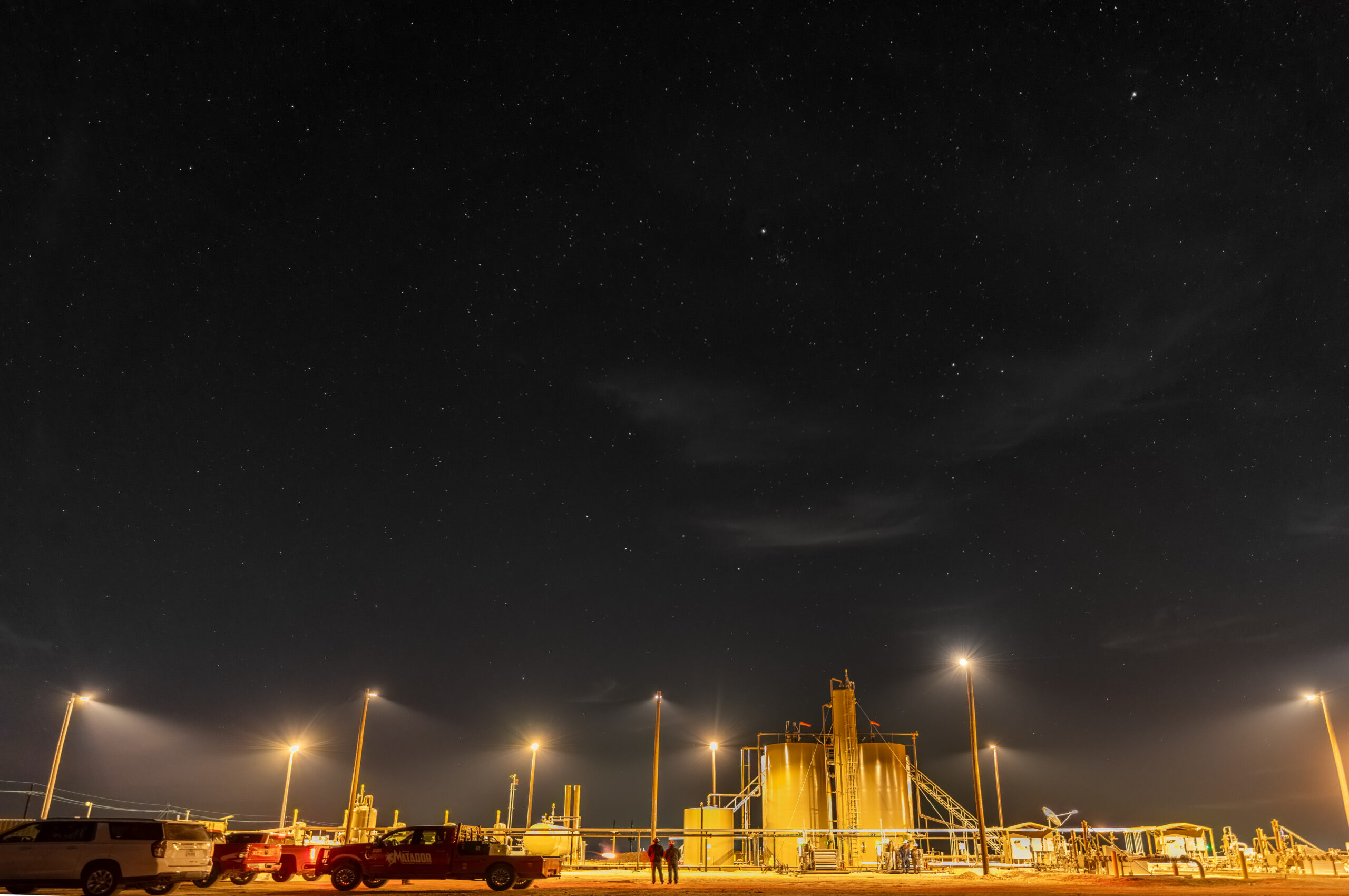
On January 8, the Dark for the Park Alliance released a new set of lighting guidelines for New Mexico’s oil and gas industry. Lighting Guidance Options for the Energy Industry provides cost-effective strategies to reduce unnecessary light and energy waste while maintaining or exceeding job site safety standards.
The document builds on similar guidelines for the state of Texas, which were published in 2018 by McDonald Observatory and the Texas Oil and Gas Association. Key principles include shielding lights so they shine down rather than up; using task-appropriate light intensity; and opting for amber-colored bulbs. Thanks, in part, to the local adoption of these guidelines, McDonald Observatory enjoys some of the darkest night skies in the continental United States.
The Dark for the Park Alliance is working towards a similar goal. It seeks to maintain or restore the night sky quality of New Mexico’s Permian and San Juan Basins (in the state’s southeast and north, respectively) through the adoption of night sky friendly outdoor lighting practices.
The Alliance was founded in 2023 after Carlsbad Caverns approached the oil and gas industry with the idea of collaborating on dark sky efforts, and highlighting their benefits to the local economy, heritage to the lands, and future stewardship of them. Today, Alliance members include Carlsbad Caverns National Park, Chaco Culture National Heritage Park, New Mexico Oil and Gas Association, the Bureau of Land Management, the New Mexico State Land Office, DarkSky International, DarkSky New Mexico, Apache Point Observatory, and McDonald Observatory.
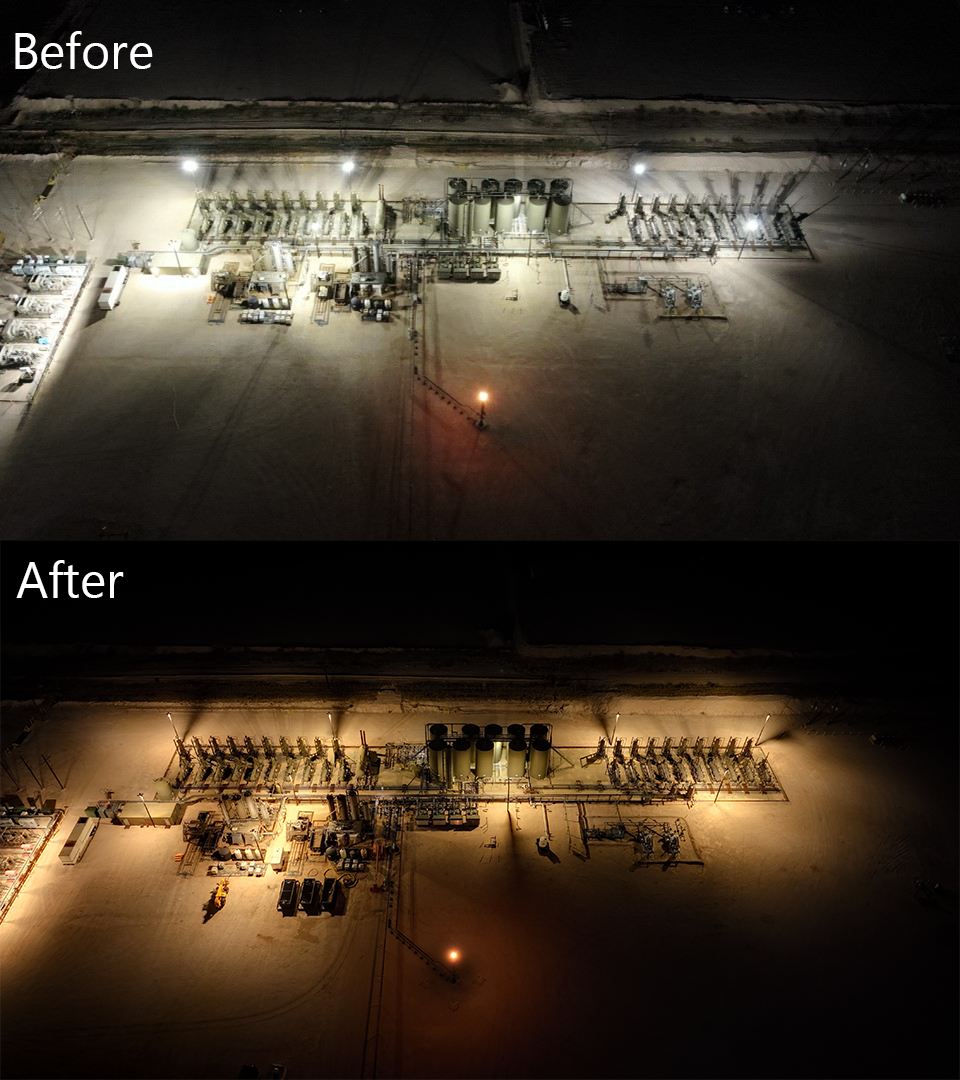
Through a pilot program, the Alliance partnered with Franklin Mountain Energy (FME) to implement night sky friendly lighting at three of its Carlsbad-area facilities: two existing sites and one new. After adopting the guidelines, the retrofitted sites saw a 60 percent reduction in lighting energy consumption. Additionally, the estimated amount of skyglow produced by the sites – that is, how bright the night sky appears due to excess artificial light – was reduced by 99 percent when measured 25 miles away.
“Safety for our workers is always our first priority,” FME Co-Founder Audrey Robertson said. “We also prioritize the environment and support night sky friendly lighting practices. I am proud of our team for working on this project with DarkSky International and the Alliance to ensure the continued beauty found throughout the Permian Basin’s skies.”
In recognition of their commitment to protecting and maintaining the nighttime environment, DarkSky International has recognized the FME locations as DarkSky Certified. These are the first oil and gas sites in the world to receive this distinction, setting a precedent for the industry.
“Promoting dark skies practices is a collaborative effort,” DarkSky International CEO Ruskin Hartley said. “The Alliance’s public-private partnership shows the importance of teamwork to achieve the workable balance between operational safety and security and protecting night sky quality.”
The Alliance’s work in New Mexico, combined with existing education and recognition efforts in West Texas, now reach the entirety of the Delaware Basin. This is a highly active region within the larger Permian Basin, one of the most productive oil and gas fields in the world.
To learn more about night sky friendly lighting practices, visit mcdonaldobservatory.org/darkskies. Properties interested in pursuing their own certification can start by visiting darksky.org/what-we-do/darksky-approved (international) or mcdonaldobservatory.org/pages/lighting-recognition-program (West Texas).
Related Posts
August 15, 2023
West Texas Businesses Preserve Night Sky – One Light Bulb at a Time
McDonald Observatory’s Dark Skies Initiative recognizes five West Texas businesses and public organizations for adopting night sky friendly lighting practices. The Alpine Visitor Center, Alpine Public Library, Marfa Visitor Center, RoadRunner Travelers RV Park in Terlingua, and Ghost Town Casitas hotel in Terlingua all worked with the Observatory to reduce […]
April 6, 2023
McDonald Observatory Celebrates One-Year Anniversary of Greater Big Bend International Dark Sky Reserve
This week, McDonald Observatory and numerous partners join in celebrating the first anniversary of the Greater Big Bend International Dark Sky Reserve. Covering more than 15,000 square miles in Texas and Mexico, the Reserve is the largest dark sky place […]
July 20, 2022
McDonald Observatory Works with Catalyst Midstream Partners to Protect Dark Skies
West Texas and the Big Bend region are known for their starry night skies, made possible in part due to ongoing efforts to preserve them. Recently, McDonald Observatory and the non-profit organization Texan by Nature recognized the efforts of Catalyst […]