
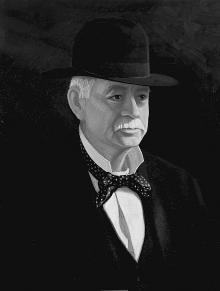
W.J. McDonald Bequest
Paris, Texas banker William Johnson McDonald left the bulk of his fortune to The University of Texas at Austin “for the purpose of aiding in erecting and equipping an Astronomical Observatory to be kept and used in connection with and as part of the University for the study and promotion of the study of Astronomical Science.”
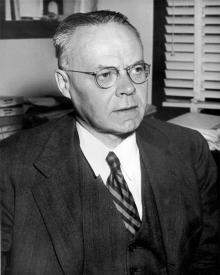
Otto Struve Directorship
Astronomer Otto Struve was the first director of McDonald Observatory. He served from November 1932 to August 1947, and was concurrently director of The University of Chicago’s Yerkes Observatory.
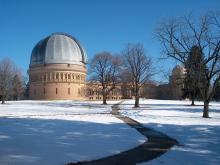
University of Texas Partners with University of Chicago
When The University of Texas at Austin received W.J. McDonald’s bequest for building an observatory, it had no astronomy department. The University of Texas entered into an a agreement with the University of Chicago, which had many fine astronomers and its own Yerkes Observatory. The deal allowed for the University of Chicago to operate McDonald Observatory for 30 years.
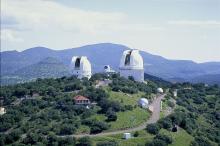
Donation of Mount Locke
Mrs. Violet Locke McIvor donated the mountain upon which now sit most of McDonald Observatory’s telescopes. Previously called “Flat Top” or “U Up and Down Mountain” (for the ranch in which it sat), it was renamed Mount Locke in honor of Mrs. McIvor’s grandfather. Dr. G.S. Locke of Concord, New Hampshire, was the founder of the ranch.
Donation of Mount Fowlkes
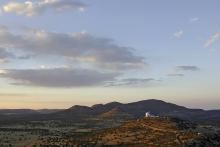
After receiving the donation of Mount Locke (previously called Flat Top) as the site for the new observatory, planners thought they should acquire the nearby smaller mountain (Little Flat Top) for possible future expansion. They received the donation from the estate of Fort Davis Judge Edwin H. Fowlkes, for whom the mountain was re-named. Decades later, the Hobby-Eberly Telescope (one of the world’s largest optical telescopes) was built atop Mount Fowlkes.
Dedication
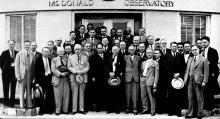
Dedication of McDonald Observatory
Discovery of Titan's Atmosphere
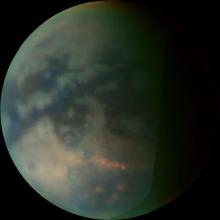
Gerard Kuiper discovered the atmosphere of Saturn’s moon Titan, the first detection of an atmosphere for any moon in the solar system.
Gerard Kuiper Directorship
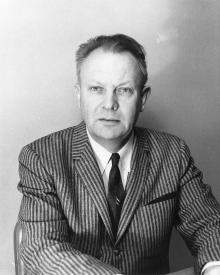
Astronomer Gerard Kuiper served as director of McDonald Observatory for approximately two years.
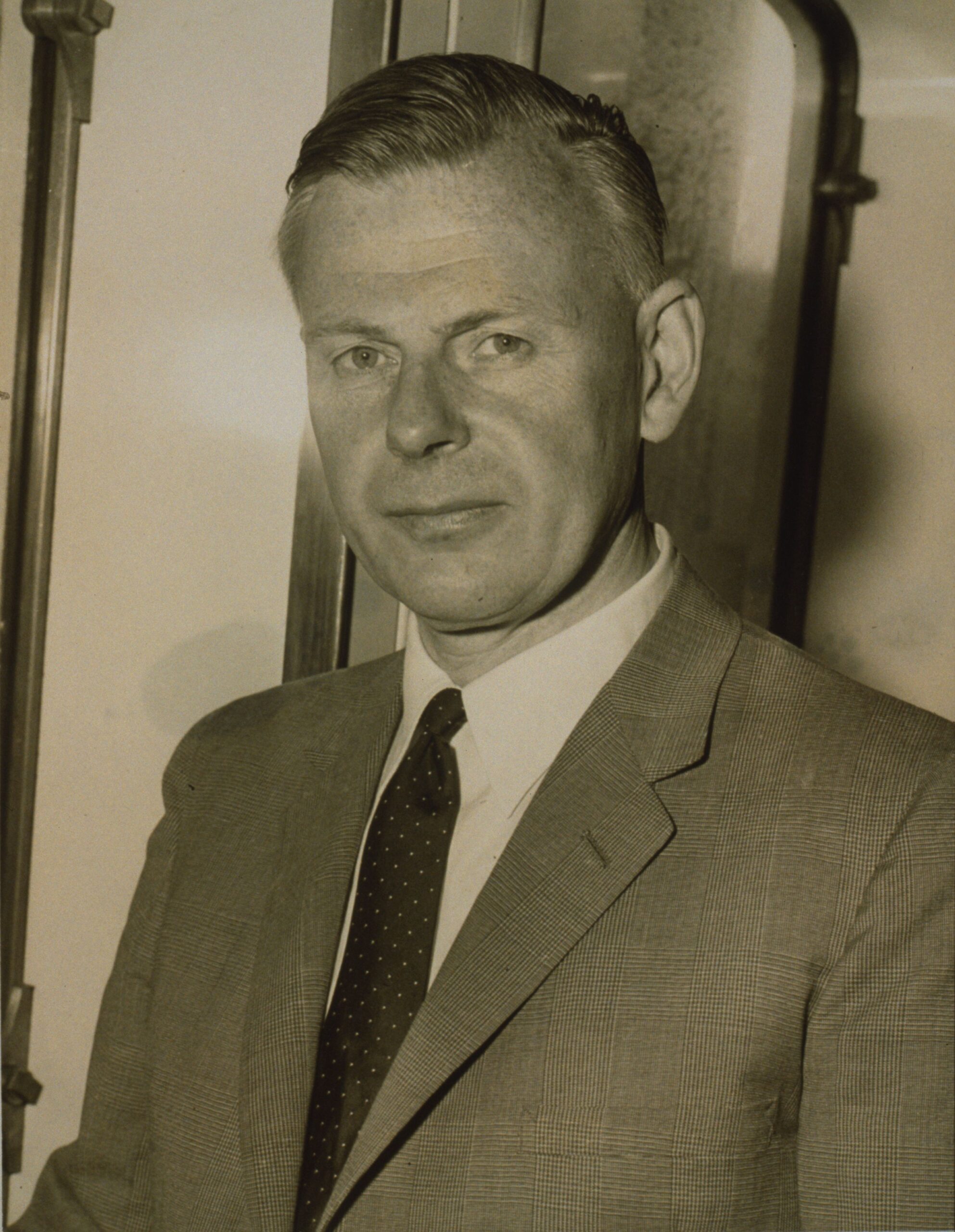
Bengt Strömgren Directorship
Bengt Strömgren served as director of McDonald Observatory from January 1951 through August 1957.
Improving the View
Harold Johnson and W.W. Morgan devised a system for measuring the colors of stars. The system, which is still in use today, allows astronomers to remove the effect of interstellar dust, which makes stars look redder.
Second Kuiper Directorship
Gerard Kuiper served a second time as director of McDonald Observatory from September 1957 to March 1959.
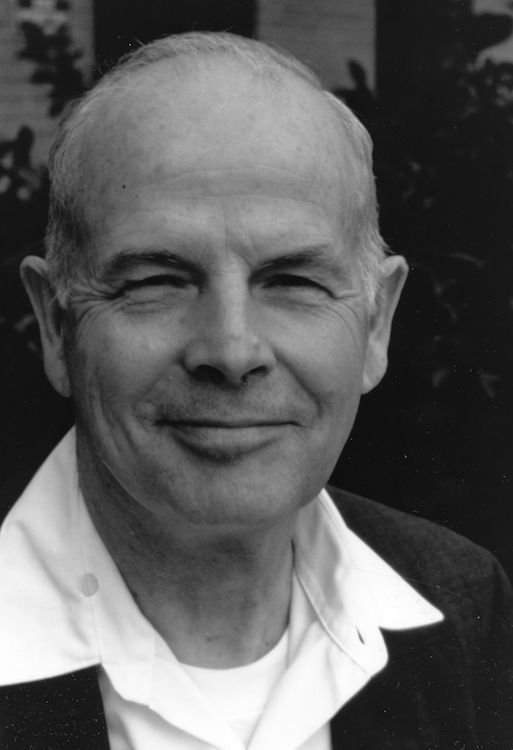
William W. Morgan Directorship
William W. Morgan served as director of McDonald Observatory from April 1959 to August 1963. He was the final McDonald director from the University of Chicago.
Shape of the Milky Way
Gerard De Vaucouleurs proposed that the Milky Way galaxy is a barred spiral, with spiral arms extending from a long “bar” of stars in its center.

Harlan J. Smith Directorship
Harlan J. Smith was the first University of Texas director of McDonald Observatory, and served simultaneously as chair of the new astronomy department in Austin. Among many other accomplishments, he led the construction on the 107-inch telescope that now bears his name. More information on Harlan J. Smith is available on his University of Texas memorial page.
Dedication of the 107-inch Telescope
Dedication of the 107-inch (2.7-meter) Telescope. It was later renamed the Harlan J. Smith Telescope in honor of the observtory director responsible for its construction.
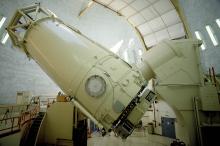
Coude Spectrograph
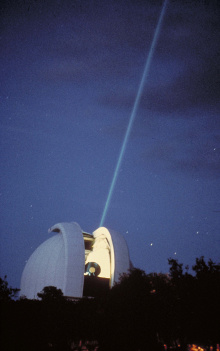
Reflecting a Laser Off the Moon
One month after Neil Armstrong took the first “small step” on the Moon, McDonald Observatory reflected a laser beam off a special mirror left on the Moon by the Apollo 11 crew. The experiment measured the Earth-Moon distance with an accuracy of a few inches.

StarDate Radio Program Debuts
McDonald Obervatory’s StarDate radio program debuted on the nation’s airwaves, initially funded by a grant from the National Science Foundation. Today, StarDate is the longest running, nationally syndicated science show on radio. It currently airs on more than 300 stations. More information is available at StarDate Online.
W.L. Moody Visitors Information Center opened
The W.L. Moody Visitors Information Center opened in 1982. For two decades, it served thousands of visitors to McDonald Observatory.
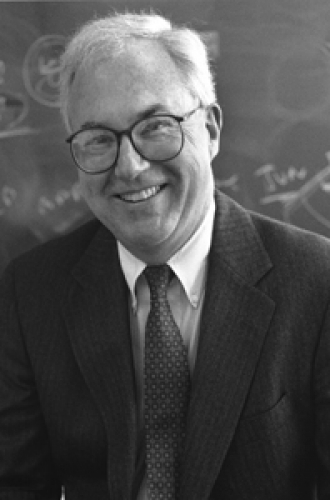
Frank N. Bash Directorship
Astronomer Frank N. Bash served as director of McDonald Observatory from 1991 to 2003, and served two years as interim director from 1989-1990.
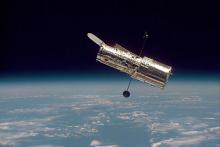
Helping with Hubble Space Telescope
NASA launches Hubble Space Telescope, which was developed and planned with the input of several University of Texas astronomers and engineers. In particular, Fritz Benedict and Bill Jeffreys led a team developing the telescope’s Fine Guidance Sensors, which allow it to point precisely at cosmic targets. Today, McDonald astronomers routinely use Hubble and other space-based telescopes in their research.
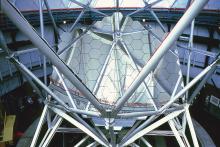
Dedication of Hobby-Eberly Telescope
The innovative Hobby-Eberly Telescope was dedicated. It uses a mosaic of 91 individual mirror segments to create a primary mirror with an effective light-gathering power of a single 9.2-meter mirror.
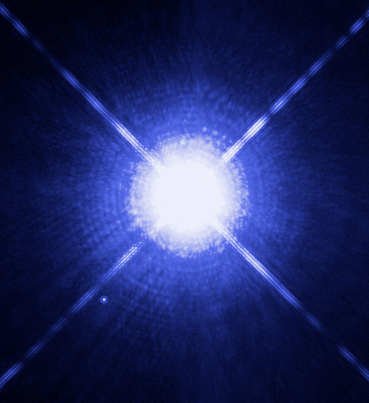
First Planet Orbiting a Close Binary Star
Using the Hobby-Eberly Telescope, McDonald astronomers including Bill Cochran discovered the first planet orbiting a close-together binary star system. It is one of many exoplanet discoveries made at McDonald.
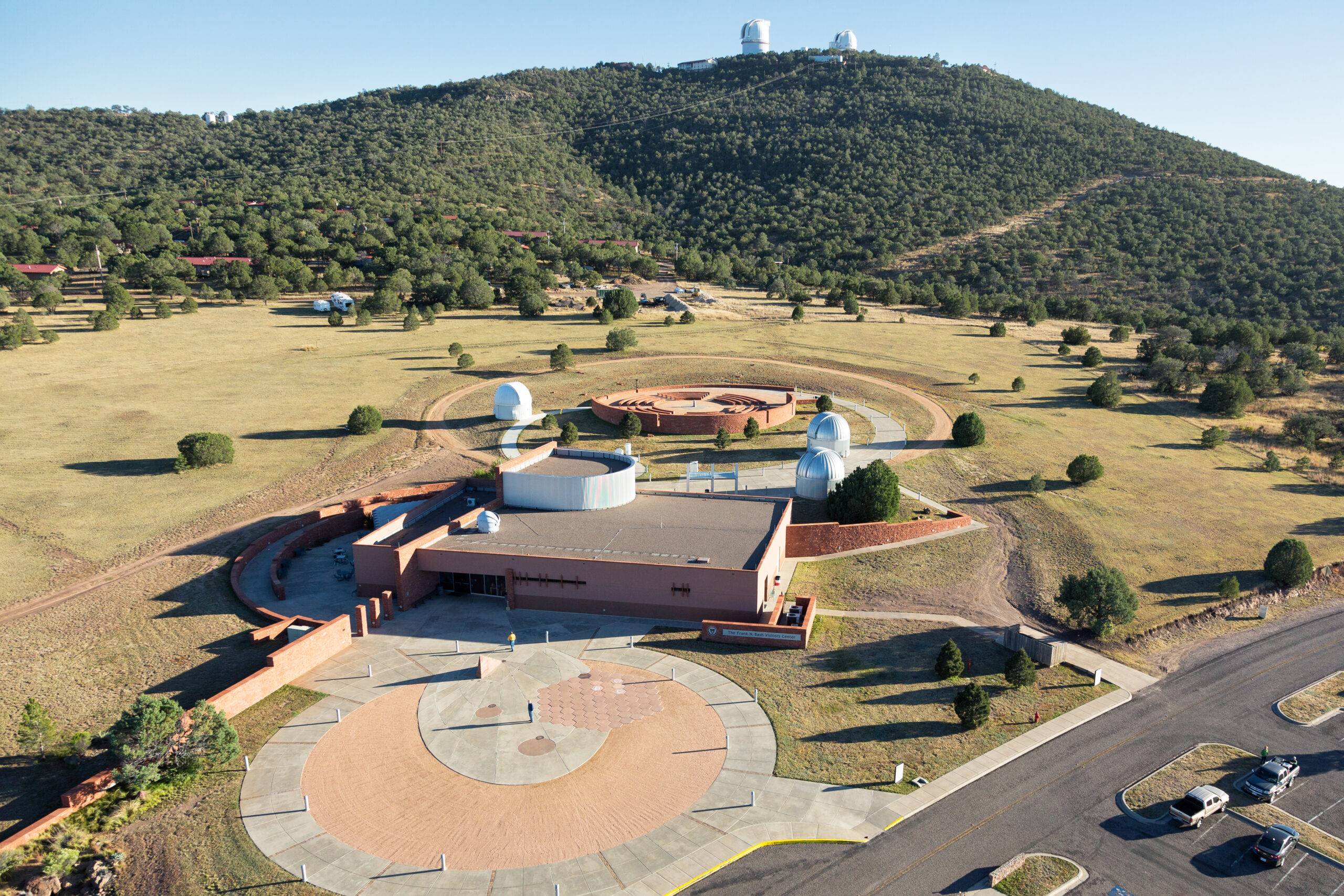
Frank N. Bash Visitors Center Opens
The 12,000-square-foot Frank N. Bash Visitors Center opened. Originally called the Texas Astronomy Education Center, it features an interactive exhibit, 90-seat theater, cafe, gift shop, and outdoor telescope park and amphitheater. It was later renamed the Frank N. Bash Visitors Center for the the former director of McDonald Observatory.
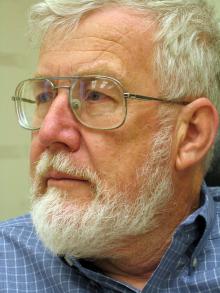
David Lambert Directorship
Dr. David L. Lambert became director of McDonald Observatory in 2003. Lambert also holds the Isabel McCutcheon Harte Centennial Chair in Astronomy, and has been a professor at The University of Texas at Austin since 1969. He retired as observatory director in 2014.
Most Powerful Supernova
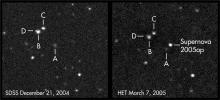
An automated search using a McDonald telescope discovered the most powerful supernova to date, Supernove 2005ap.The exploding star briefly shone 100 billion times brighter than the Sun. The Texas Supernova Search project was run by University of Texas graduate student Robert Quimby using the ROTSE IIIb telescope at McDonald.
Dark Energy Search
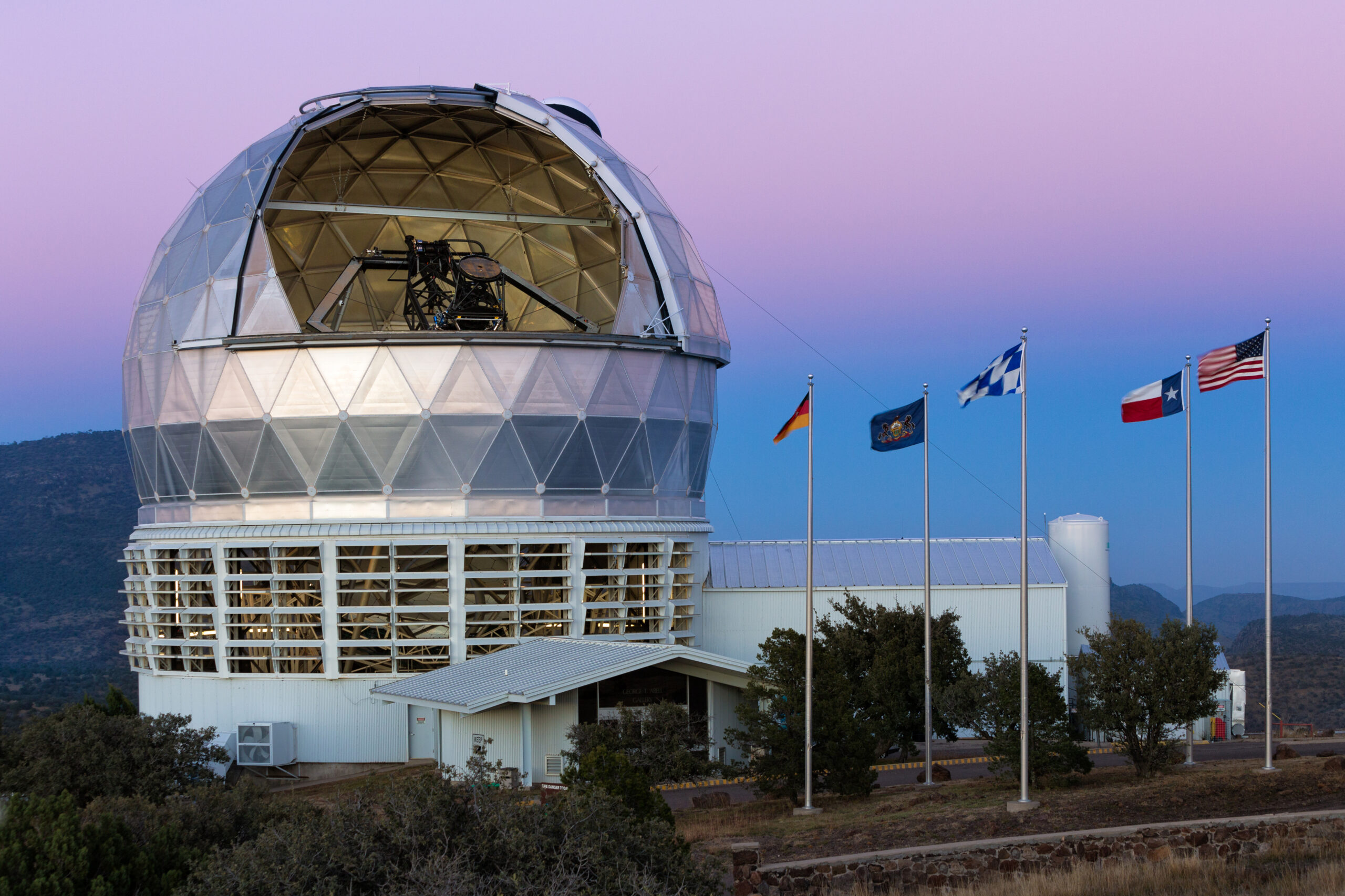
McDonald astronomers Gary Hill and Karl Gebhardt began developing the Hobby-Eberly Telescope Dark Energy Experiment (HETDEX). It will examine more than one million galaxies to probe the nature of dark energy, which is causing the universe to expand faster as it ages.
Taft Armandroff Directorship
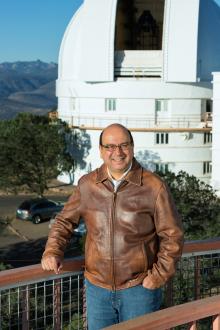
Taft Armandroff became director of McDonald Observatory on June 1, 2014. He had previously served as director of the W.M. Keck Observatory in Hawaii. Armandroff’s research specialties include dwarf spheroidal galaxies, stellar populations, and globular clusters.
Construction Begins on Giant Magellan Telescope
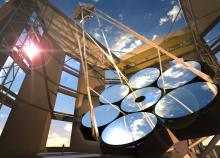
Eleven international partners, including The Univesity of Texas at Austin, announced June 3, 2015, that they had approved the start of construction on the Giant Magellan Telecope (GMT). The telescope is poised to become the world’s largest.
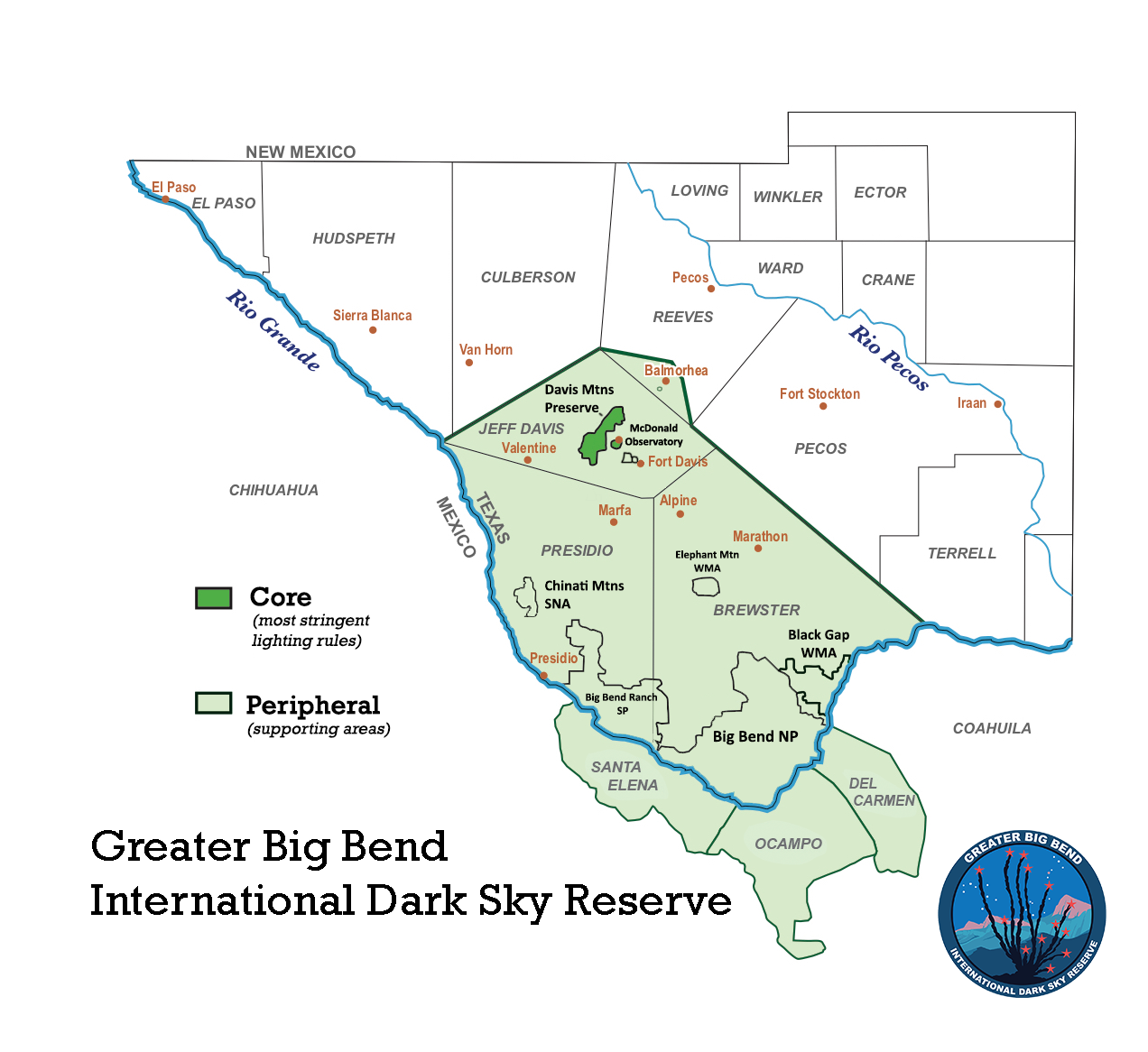
Big Bend International Dark Sky Reserve Established
In 2022, McDonald Observatory helped establish the Greater Big Bend International Dark Sky Reserve. Through the support of local governments, businesses, and property owners, the Reserve features some of the darkest night skies in the continental United States. Covering over 15,000 square miles, it is the largest Dark Sky Reserve in the world and the first to cross an international boundary.