|
HETDEX: The HET Dark Energy Experiment
Astronomy is competitive. To attack the
big questions, we need to keep investing in
forefront facilities. The University of Texas
McDonald Observatory can achieve this in
a very cost-effective way by upgrading the
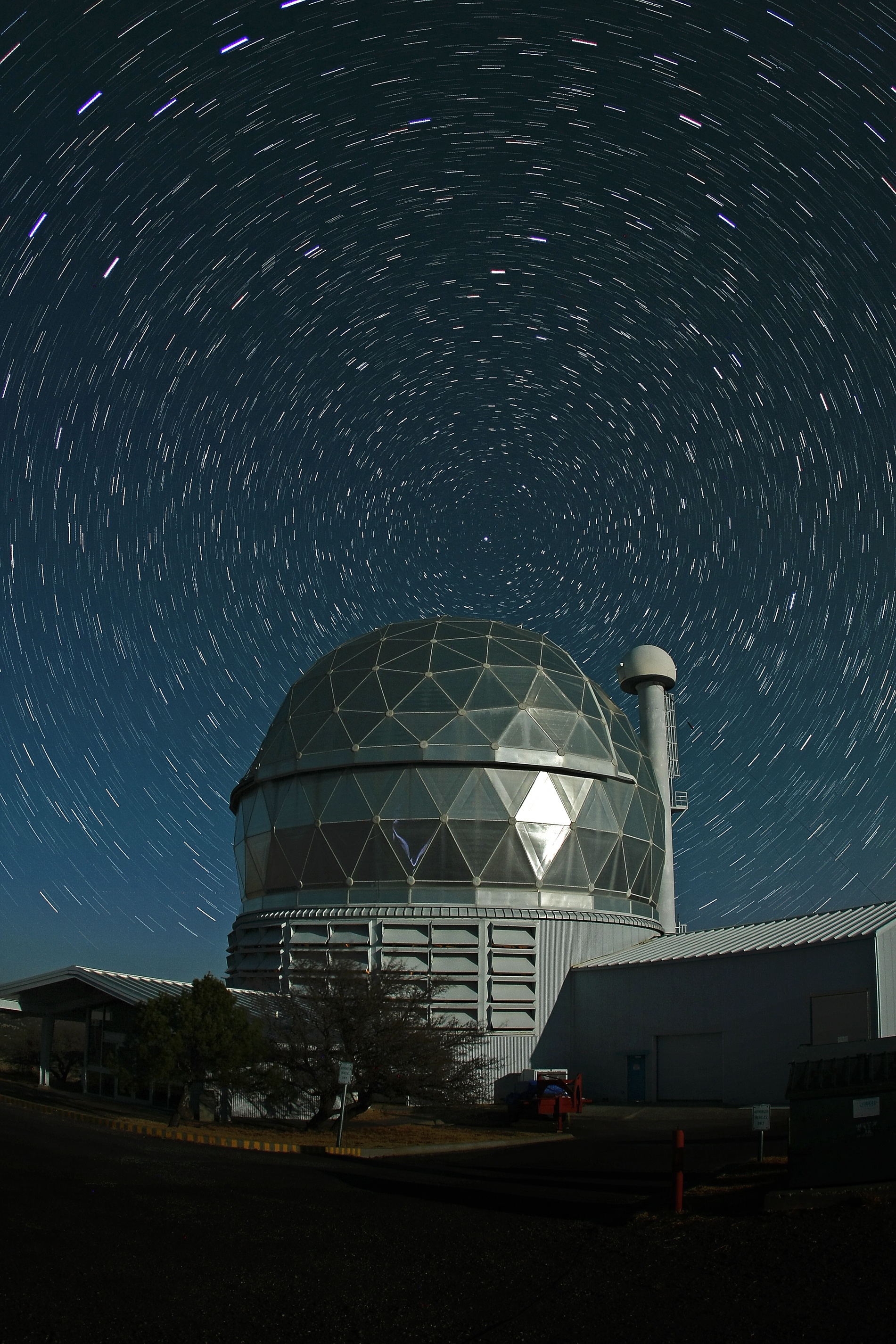
Hobby-Eberly Telescope (HET) and adding
to it innovative new instrumentation. At the
same time this upgrade will allow Texas astronomers to answer the biggest question
in all of science. |
 |
Dark Energy and Dark Matter
We only understand 4% of what makes up the universe. The nature of dark matter and dark energy is the greatest and most exciting problem in all of science. Dark energy is the name given to the phenomenon of the accelerating universe, whose expansion is speeding up over time.
Science does not know what dark energy is. Is it new particles? Energy of the vacuum of
space? A change in the law of gravity? We know how to find out. Texas astronomers can differentiate between
these possibilities with new facilities. Explaining dark energy will cause a fundamental
change in our understanding of the laws of
nature.
The Hobby-Eberly Telescope Dark Energy Experiment (HETDEX)
-
HETDEX is the quickest and most cost-effective project to uncover the secrets of dark energy. It uses our large Hobby-Eberly Telescope
and an innovative new instrument called VIRUS to survey the sky ten times faster than existing facilities worldwide.
-
HETDEX is competitive with projects costing billions that
are being proposed worldwide. Only three projects including HETDEX are currently moving forward. Of these, HETDEX is in the lead at a cost of $34 million — lowest cost of all proposed projects.
-
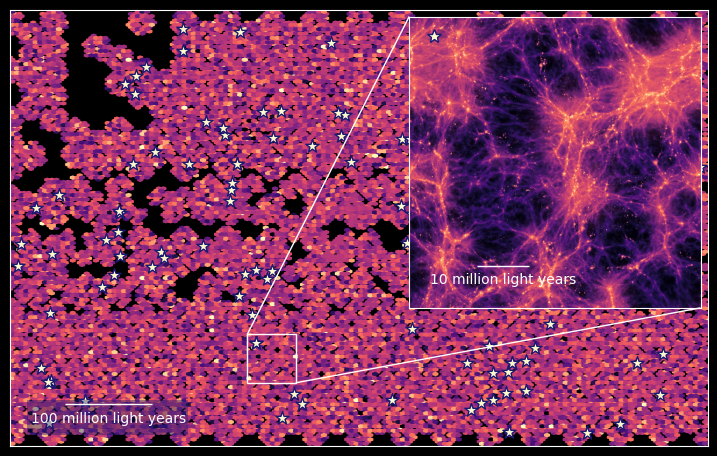
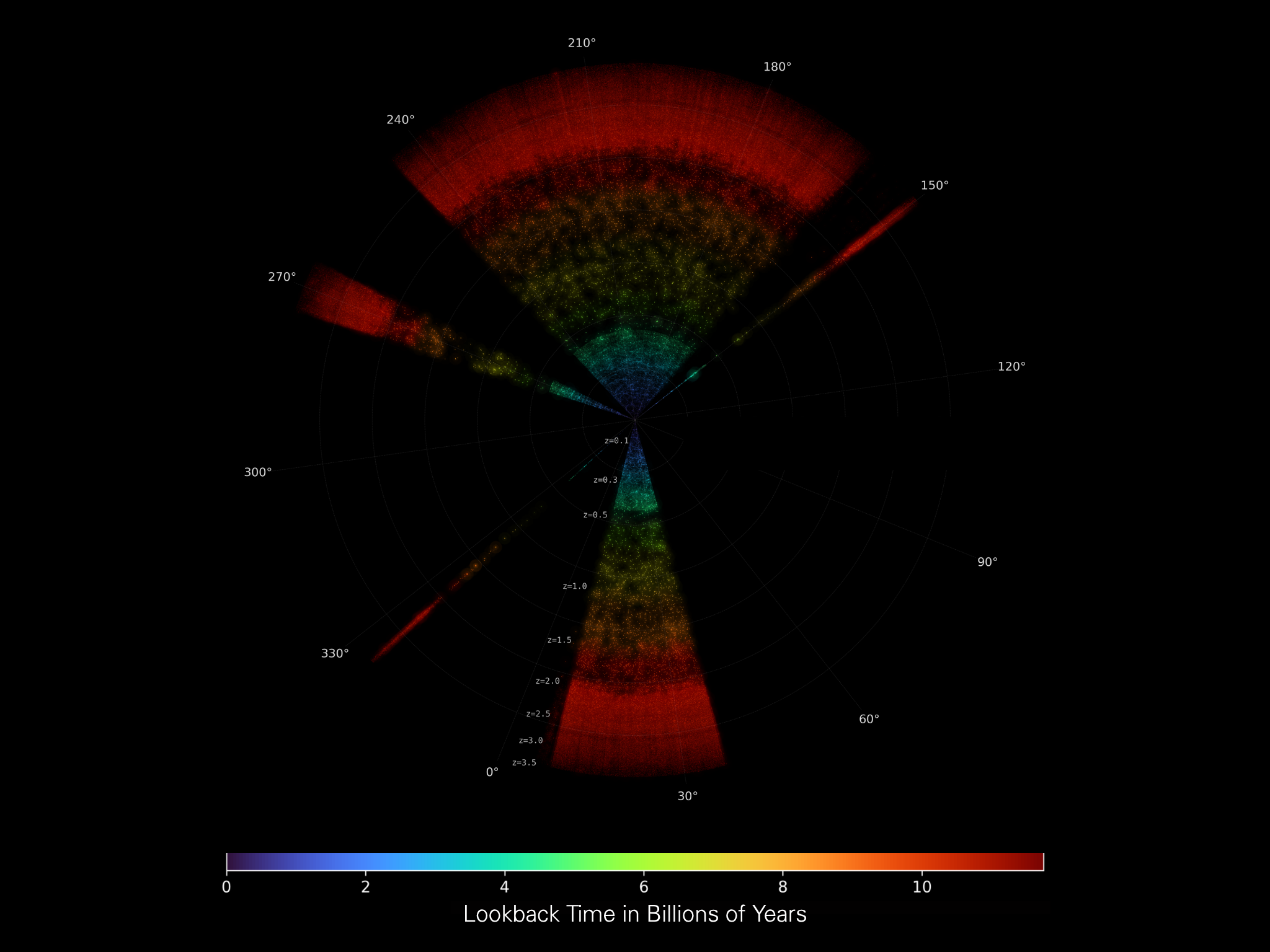
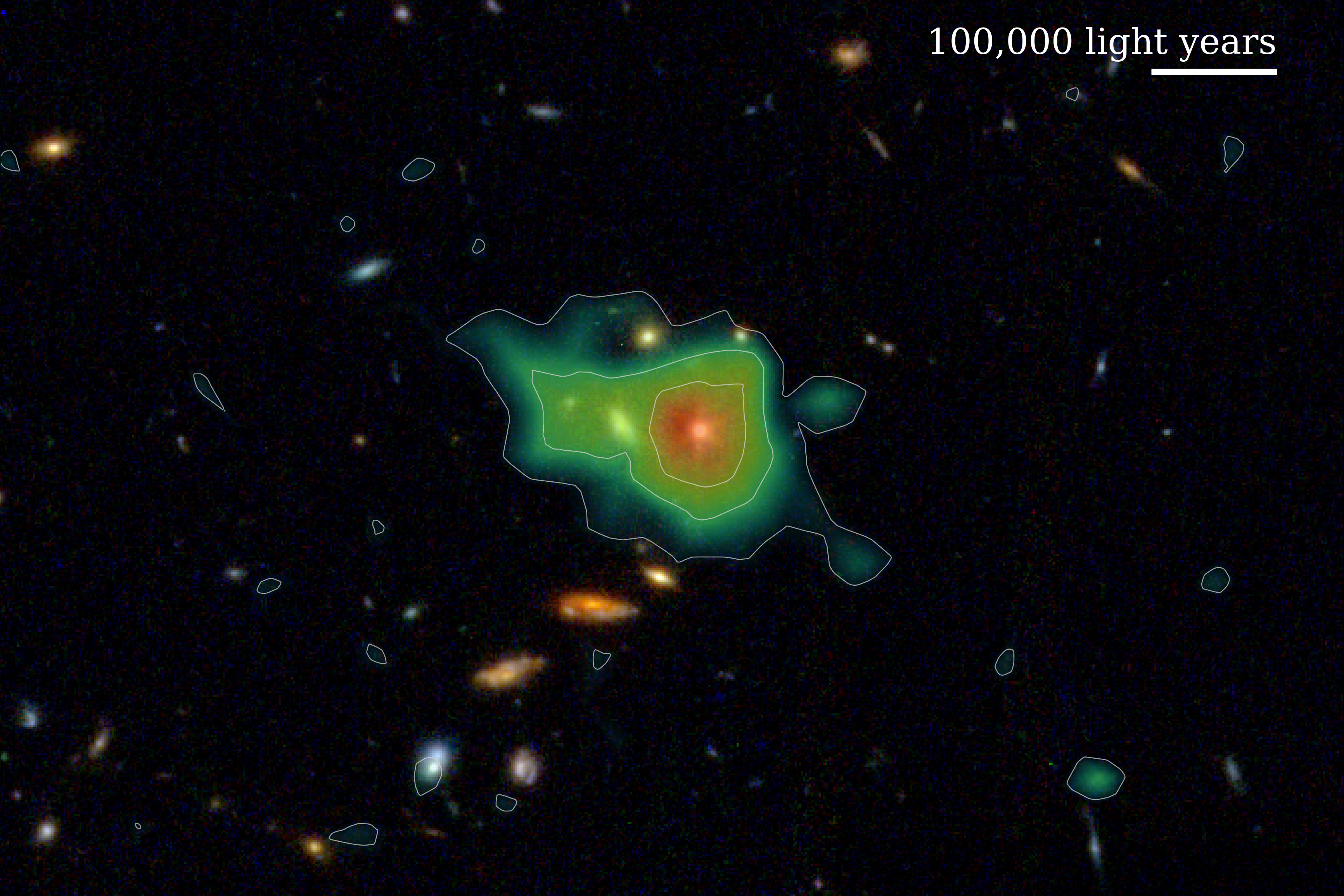
HETDEX will make the largest map of the Universe ever,
traced by a million galaxies.
-
HETDEX looks back in time 10 billion years.
-
HETDEX will measure how dark energy changes with time: It is better than other experiments at measuring the change because it looks back so far in time; a change in the properties of dark energy will be the key discriminator between the different possibilities for the nature of dark energy.
HET Upgrade and VIRUS
HETDEX will upgrade the Hobby-Eberly Telescope to look at 25 times more sky, increasing
our field of view to half the area of the Moon. This will be accomplished by adding
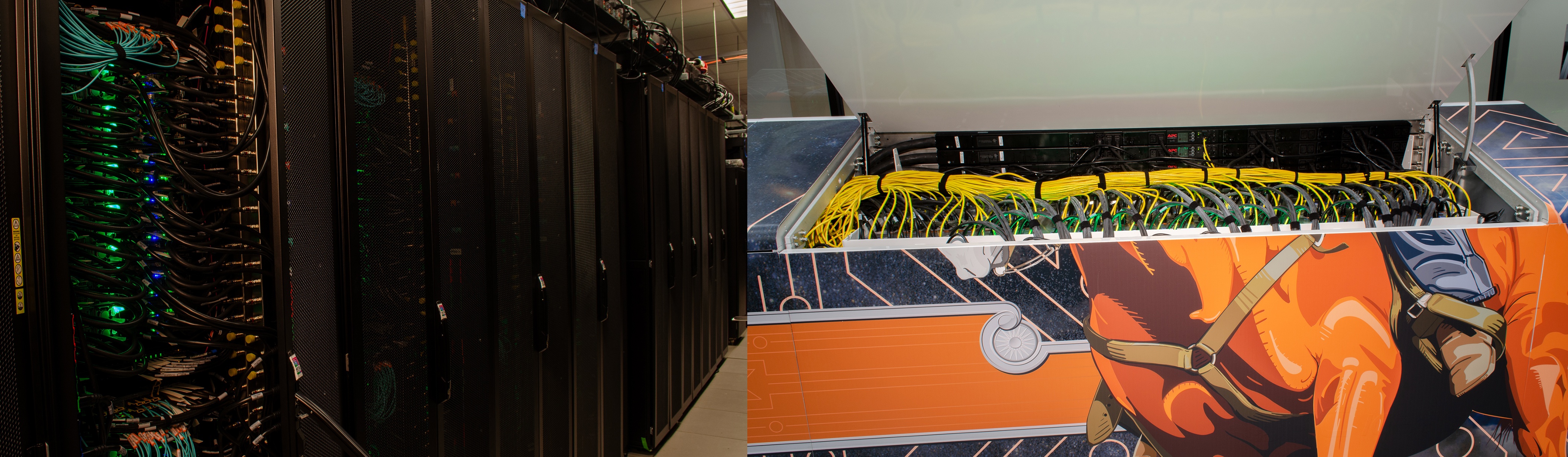
new optics and an innovative new instrument to the HET, known as VIRUS. The VIRUS instrument will consist of 150 copies of a simple spectograph,
replicated cheaply. We are pioneering
this approach to save on cost and to remove
engineering risk by prototyping the unit.
How HETDEX Works
Together, the upgraded HET and VIRUS will
execute the largest
astronomical survey
ever made. This facility
will be unmatched in
the world, giving Texas
astronomers the ability
to survey the sky
10 times faster than
any existing
facility worldwide.
It has
the power to
address the
problem of
dark energy.
In short, the
HET makes
HETDEX
work.
HETDEX Fast Facts and Benefits
-
It will answer a fundamental question about our Universe and generate great public interest.
-
Led by UT Austin with
strong participation from Texas A&M and a small number of other institutions in the US and Germany.
-
The project and
fantastic facility that will result will attract the best researchers and students to Texas, which in turn seeds the next generation of
scientists and engineers.
-
The project Web site — HETDEX.org — has already proven to be a great resource and investment.
-
HETDEX will be a catalyst for attracting the next generation into science.
-
There is great need to attract and retain
K-12 students in science, and the McDonald Observatory Education and Outreach Office has the means to bring this exciting story
to teachers and students and use it as a tool to generate excitement that will follow through to the workforce.
-
We are at a revolutionary time in science and Texas can play a pivotal role that will be reported in K-12 and university textbooks for decades.
HETDEX Partners
- The University of Texas at Austin McDonald
Observatory
- Texas A&M University
- Max-Planck-Institut
fuer Extraterrestrische
Physik
- Pennsylvania State
University
- Ludwig-Maximilians-Universität Munchen
- Astrophysical Institute
Potsdam
For more details on this project, visit http://hetdex.org.
|