
McDonald Observatory collaborates with communities and businesses to preserve far West Texas’s famous night skies. Endlessly star-filled skies are possible through the adoption of outdoor lighting practices that direct light down instead of up. In addition to its benefits for astronomical research, limiting light pollution is good for the environment, human health, and nighttime safety.
Through the Dark Skies Initiative, McDonald Observatory:
- Educates the public about night sky friendly lighting practices and dark sky preservation.
- Helped establish the Greater Big Bend International Dark Sky Reserve, the largest Dark Sky Reserve in the world.
- Actively monitors and reports on light pollution in Far West Texas.
- Works with businesses and property owners in West Texas to advise on lighting practices and regulatory compliance.
- Runs the Night Sky Friendly Lighting Recognition Program.
- Celebrates Dark Skies Week with special onsite activities and talks.
Negative Effects of Light Pollution

Costs:
$15.4 billion dollars could be saved each year by adopting better lighting practices in the United States.
Energy Consumption:
About one-third of outdoor lighting shines where it isn’t needed, wasting enough energy to power a large U.S. city.

Health:
New studies point to dramatic health consequences from the disruption of the natural human day/night cycle. Artificial light at night affects hormone production and suppresses the immune system.

Safety:
Vision is impaired by “glare” from overly bright light sources, reducing sensitivity to fine details and color perception, especially in elderly people. Brighter lights cause shadows to appear darker.

The Environment:
Artificial light at night has been shown to disrupt the mating, migration, and hunting behaviors of many different species, and therefore the ecological system as a whole.

Loss of the Night Sky:
The view of stars and dark night skies is rapidly being lost. Generations are growing up having never seen the Milky Way. Sky glow resulting from artificial lighting dramatically hinders the science of astronomy.
What You Can Do to Help
Lead by Example
By adopting night sky friendly outdoor lighting practices you can prevent light pollution while using less electricity.
Night Sky Friendly Lighting Practices
Most Light-Producing
Shielding
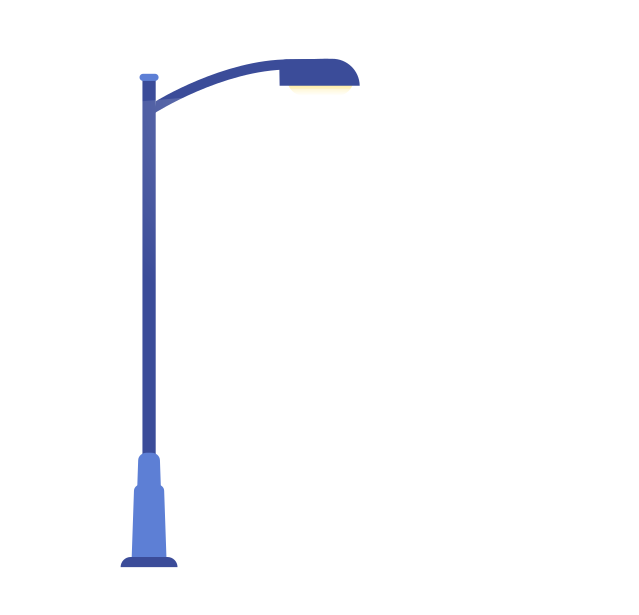
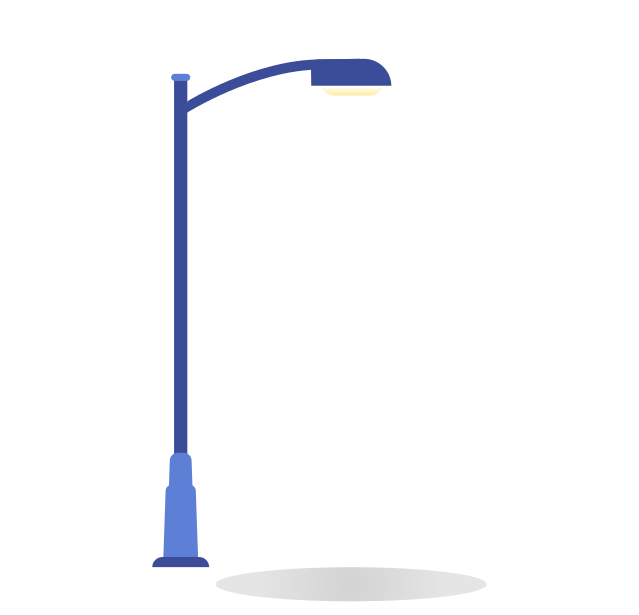
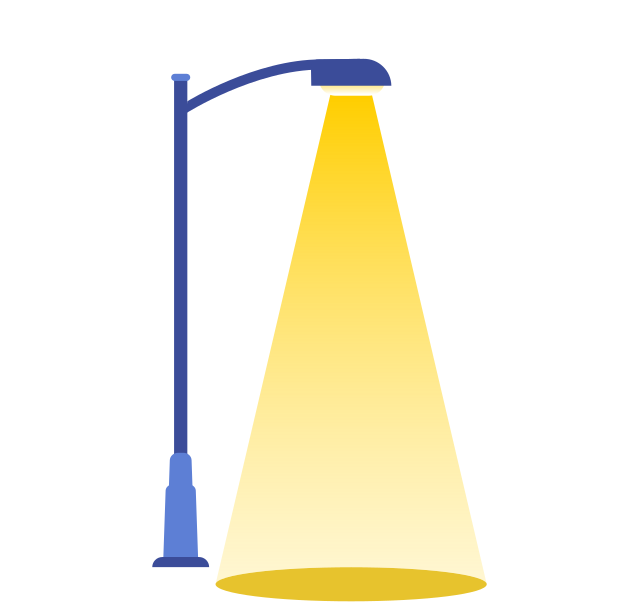
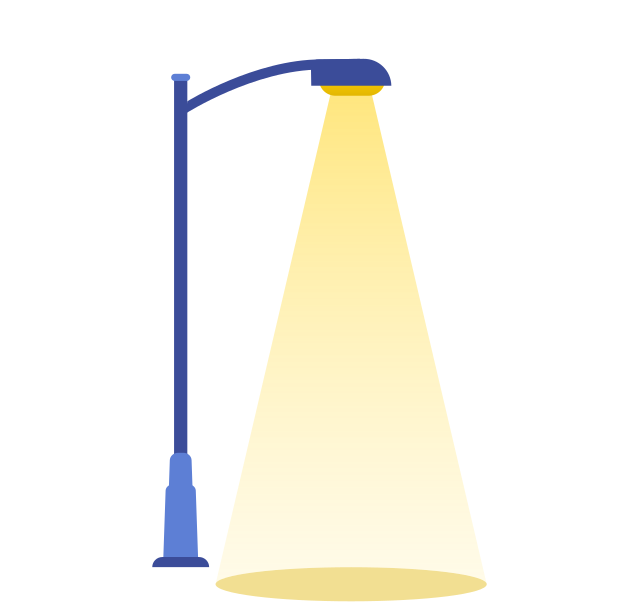
Light fixtures should be shielded such that the light source is not visible from above or from off-property. Lights should be aimed down at the ground.
Color
Light sources should have a color temperature of 2,700K or below (soft white/amber).
Intensity
Light sources should not emit more light than is necessary.
Timing
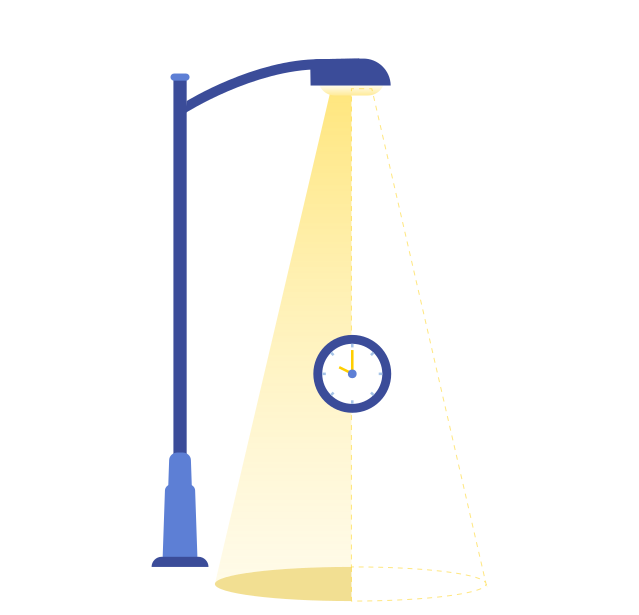
Lights that are not serving their purpose, such as business signs or decorative lights after hours, should be turned off, put on a timer to turn off automatically, or only activated temporarily with a motion sensor.
Other Ways to Help
Spread the Word
The solution to light pollution is 90% education and awareness, and 10% hardware. Identify examples of good lighting in your community and show them to your friends and neighbors. Once people see it, they can’t un-see it. Once they understand the implications for cost savings and improved visibility, they are far more likely to adopt good lighting practices on their own.
Visit our Resources page for helpful links and pamphlets.
Get Involved
You can also get involved in your local community by joining a chapter of the Dark Sky International or volunteer with the Greater Big Bend International Dark Sky Reserve.
Support Us
If you’re already practicing good lighting, you can help support our efforts by donating to the Dark Skies Initiative fund. These funds will go towards upgrading and replacing light fixtures in the area and promoting awareness of good lighting practices.
Greater Big Bend International Dark Sky Reserve
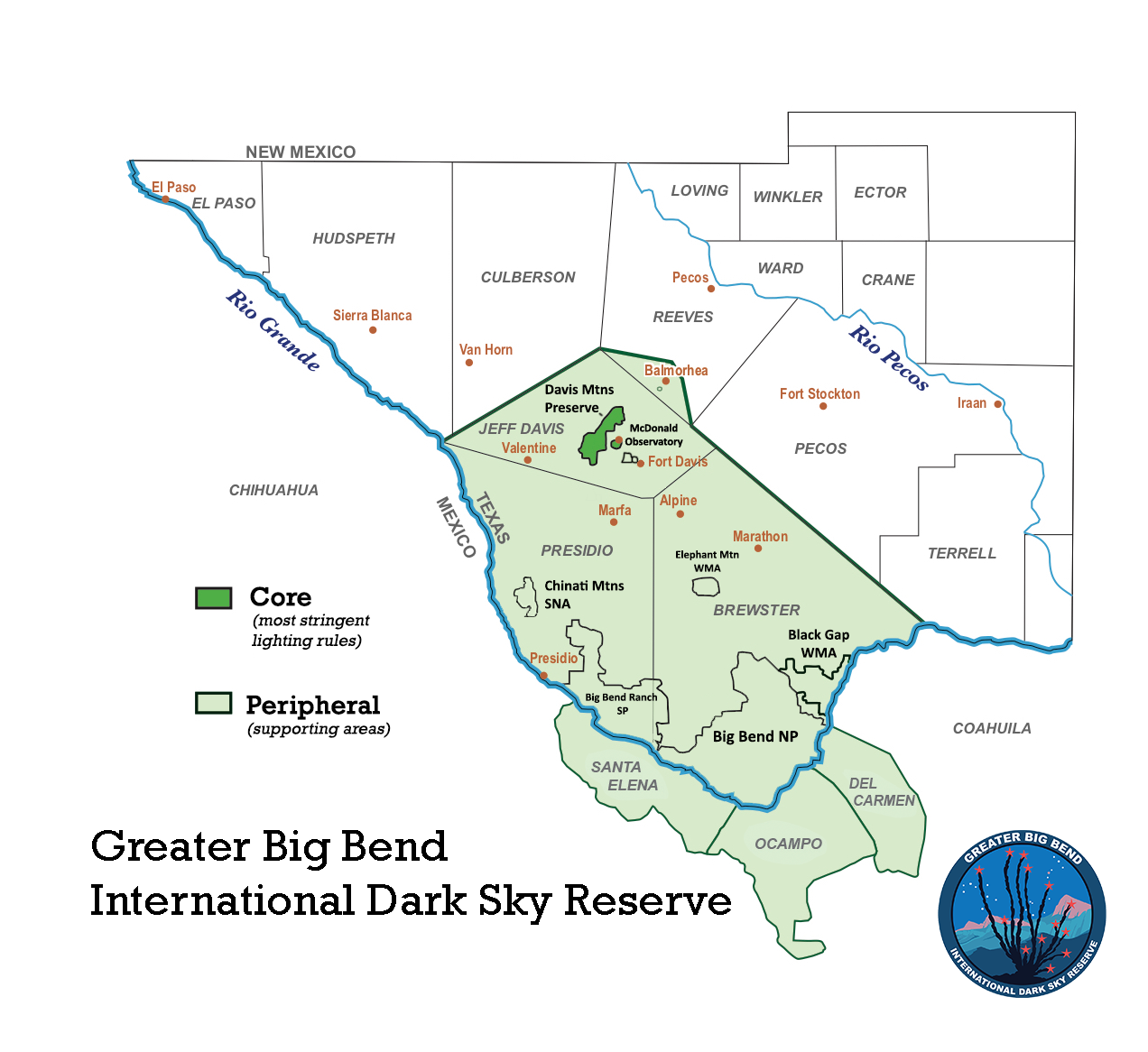
In 2022, McDonald Observatory helped establish the Greater Big Bend International Dark Sky Reserve. Through the support of local governments, businesses, and property owners, the Reserve features some of the darkest night skies in the continental United States. Covering over 15,000 square miles, it is the largest Dark Sky Reserve in the world and the first to cross an international boundary.
A Dark Sky Reserve is a land possessing exceptional quality of starry nights. Certified by DarkSky International, they are places specifically protected for their scientific, natural, educational, or cultural value.
Organizations We Work With
- DarkSky International
- The Nature Conservancy
- Big Bend Citizens Alliance
- Texas Parks and Wildlife
- National Park Service
- City of Alpine
- Marathon Chamber of Commerce
- Fort Davis Chamber of Commerce
- Tierra Grande Master Naturalists
- Brewster, Jeff Davis, Presidio, and Hudspeth Counties