Home Contact | About | Friends of McDonald | StarDate Online | Sign up for Sky Tips
McDonald Observatory McDonald Observatory
SupportVisitorsTeachersNewsResearchGift Shop
K-12 Astronomy Program Teacher Professional Development Workshops
McDonald Observatory offers professional development workshops in astronomy to teachers and students through its new Visitors Center located high in the Davis Mountains of West Texas, just west of the charming town of Ft. Davis. Astronomers from the University of Texas at Austin and around the world visit the Observatory to carry out their astronomical research and explore the universe. We invite you to immerse yourself in this science environment to renew your excitement about science, increase your confidence, and add to your teaching skills through our professional development programs. We offer quality workshops that are customized to meet your needs and based on the Texas Essential Knowledge and Skills and National Science Education Standards.

Continuing education credits
The professional development program focuses on astronomy skills and hands-on inquiry based activities that provide SBEC Continuing Professional Education credits.

Astronomy skills
Have fun learning astronomy while taking advantage of the special opportunities to explore the unique research facilities and dark skies of McDonald Observatory. View the Sun through specially filtered telescopes and participate in a sunspot activity that you can take back to your classroom. Get a behind-the-scenes tour of McDonald Observatory telescopes, meet astronomers, and learn about the diverse careers and the people that live and work at an observatory. Learn to read and use a star map and then sharpen your skills during an evening of viewing using professional quality telescopes such as the famous Struve 2.1-meter telescope that established McDonald Observatory in 1937.

Hands-on inquiry based activities
K-5: Observe and track the apparent motion of the Sun and model the day-night cycle. Build a reflective solar cooker and experiment to find the best cooking conditions. Transform into a planet and orbit the Sun in step with other orbiting planets, moons, and asteroids. Make colorful travel brochures to a favorite solar system destination. Perform activities that explore fundamental concepts of Earth's spherical shape, gravity, and lenses.

6-8: Build a Sundial and a solar cooker to investigate the Sun's apparent motion and the energy its light carries to Earth. Through several solar system activities, build a scale model of the solar system, become a planet and orbit the Sun, and research characteristics of planets. Invent rock cycles for other planets. Discover the orbits of Jupiter's moons or investigate a mysterious substance called "Oobleck." Beyond the solar system, discover the color, size, and temperatures of stars.

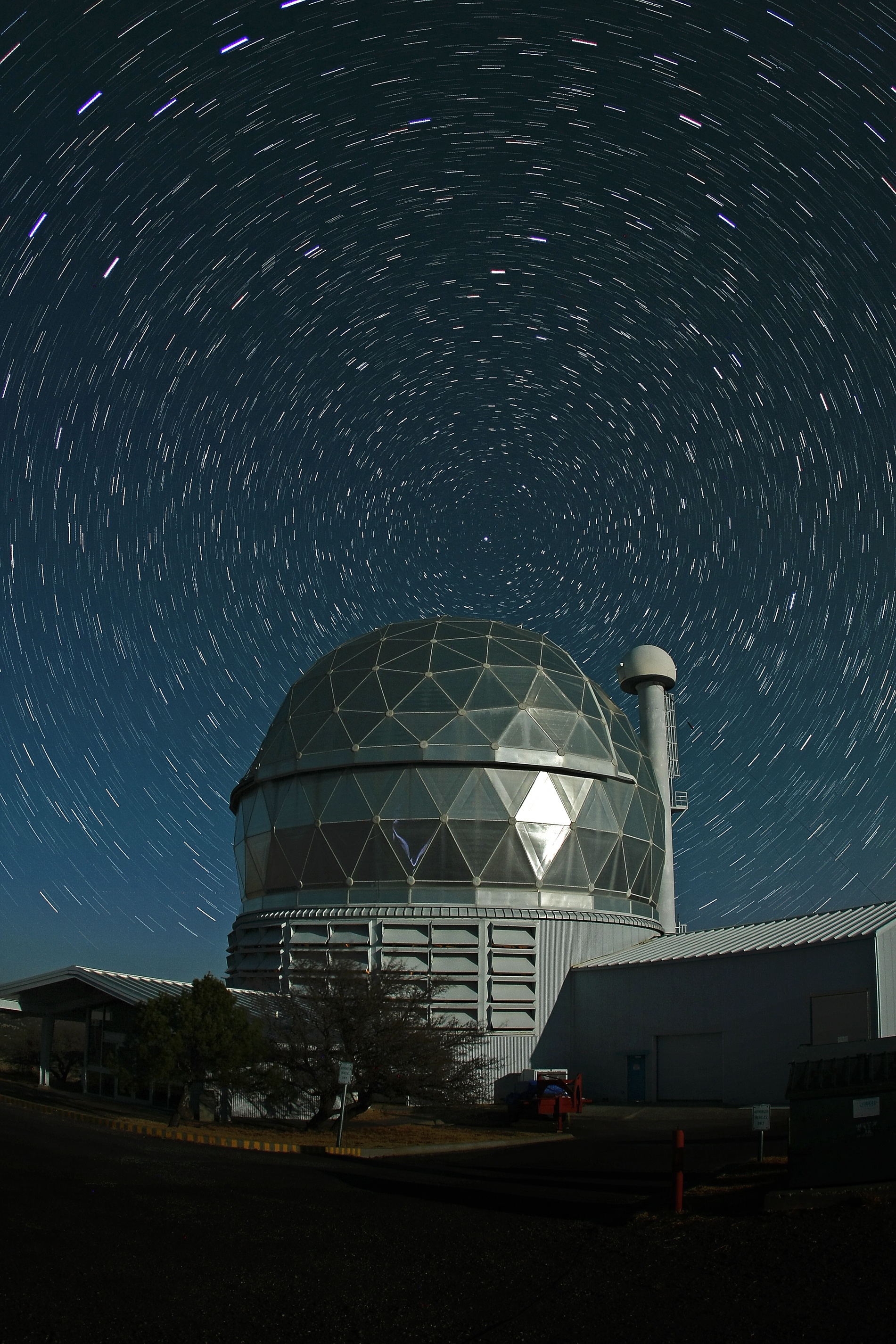
9-12: Become part of a human model of McDonald Observatory's Hobby-Eberly Telescope, the largest telescope in Texas and one of the largest in the world. Compare construction, pricing, and structural design to more traditional telescope designs. Experiment with optic fibers, build a hand-held spectroscope, and explore the ways astronomers use these tools to learn about stars, planets, and galaxies.

Program details
Programs will run throughout the year. The dates of programs and activity times are flexible according to your needs. Although nighttime observing is an rewarding experience, one day programs can be arranged without the nighttime observing component. Programs available for groups of 8-24.

2 day/1 night to 4 day/3 night
Short programs will occur during the school year. Extended programs will be available during the summer, and will give an opportunity to explore topics in greater depth.

Facilities

CLASSROOM
A lab-style room with advanced audio and video capabilities. The classroom will host most of the hands-on activities.

DECODING STARLIGHT EXHIBIT
A hands-on exhibit to lead you through the secrets hidden in spectra

ASTRONOMY PARK
Two large-aperture telescopes and a large outdoor amphitheater.

THEATER
90 seats with state-of-the-art audio and video technology for presenting video, animation, and web sites that compliment the hands-on activities

HOBBY-EBERLY TELESCOPE
The largest telescope in Texas and third largest in the world

HARLAN J. SMITH 2.7-METER TELESCOPE AND OTTO STRUVE 2.1-METER TELESCOPE
Large research telescopes used every clear night of the year

MEALS AND LODGING
Meals and lodging are available at McDonald Observatory and/or in nearby Fort Davis for pre-arranged groups.

Contact information for reservations
Brad Armosky, Science Educator
(512) 475-8844, bja@astro.as.utexas.edu

Marc Wetzel, Education Coordinator
(432) 426-3640, wetzel@astro.as.utexas.edu

Email questions to: info@mcdonaldobservatory.org

Download
PDF (971kb)

Contact
Rebecca Johnson
ph: 512-475-6763
fax: 512-471-5060
rjohnson@astro.as.utexas.edu

Selected Recent News

01 May 2008
McDonald Astronomers Discover New Type of Pulsating White Dwarf Star

22 April 2008
Award-winning, Solar-powered House Built by UT Students Comes to Observatory

15 April 2008
University Presidents, Philanthropist Encourage Texans to Support Telescope Project

02 April 2008
Astronomers Use HST, Gemini to Find Medium-Sized Black Hole

10 March 2008
WMAP Reveals Neutrinos, End of Dark Ages, First Second of Universe

More news »


© 2002-2008 The University of Texas McDonald Observatory
Last Modified: April 22, 2008 Problems using this site: webmaster@mcdonaldobservatory.org