|
About the Architecture of the New McDonald Observatory Visitors Center
Located in the Davis Mountains of West Texas, McDonald Observatory has become one of the most visited tourism sites in the state and welcomes as many as 130,000 visitors annually. The new McDonald Observatory Visitors Center takes its design cues from the early inhabitants of the southwest and their astronomical traditions.
The facility includes a 300-seat amphitheater, an exhibit hall, a classroom, a 90-seat orientation theater, a café, and a gift shop. It was designed by the 10-member, award-winning firm of Rhotenberry Wellen Architects of Midland, Texas.
The building's design responds to the rolling and scrubby terrain of its site and references West Texas building traditions and materials, as well as early Native American astronomical beliefs and practices. The site plan consists of a series of three spirals -- the entrance plaza, the outdoor eating area and the amphitheater -- with the building sited in the center. Spirals and circles refer to ancient ruins which are found in the Southwest of the United States and are thought to have been used by early civilizations to measure and record astronomical events. This gesture embraces the anthropological history of astronomy as a human endeavor and makes connections to the science's past.
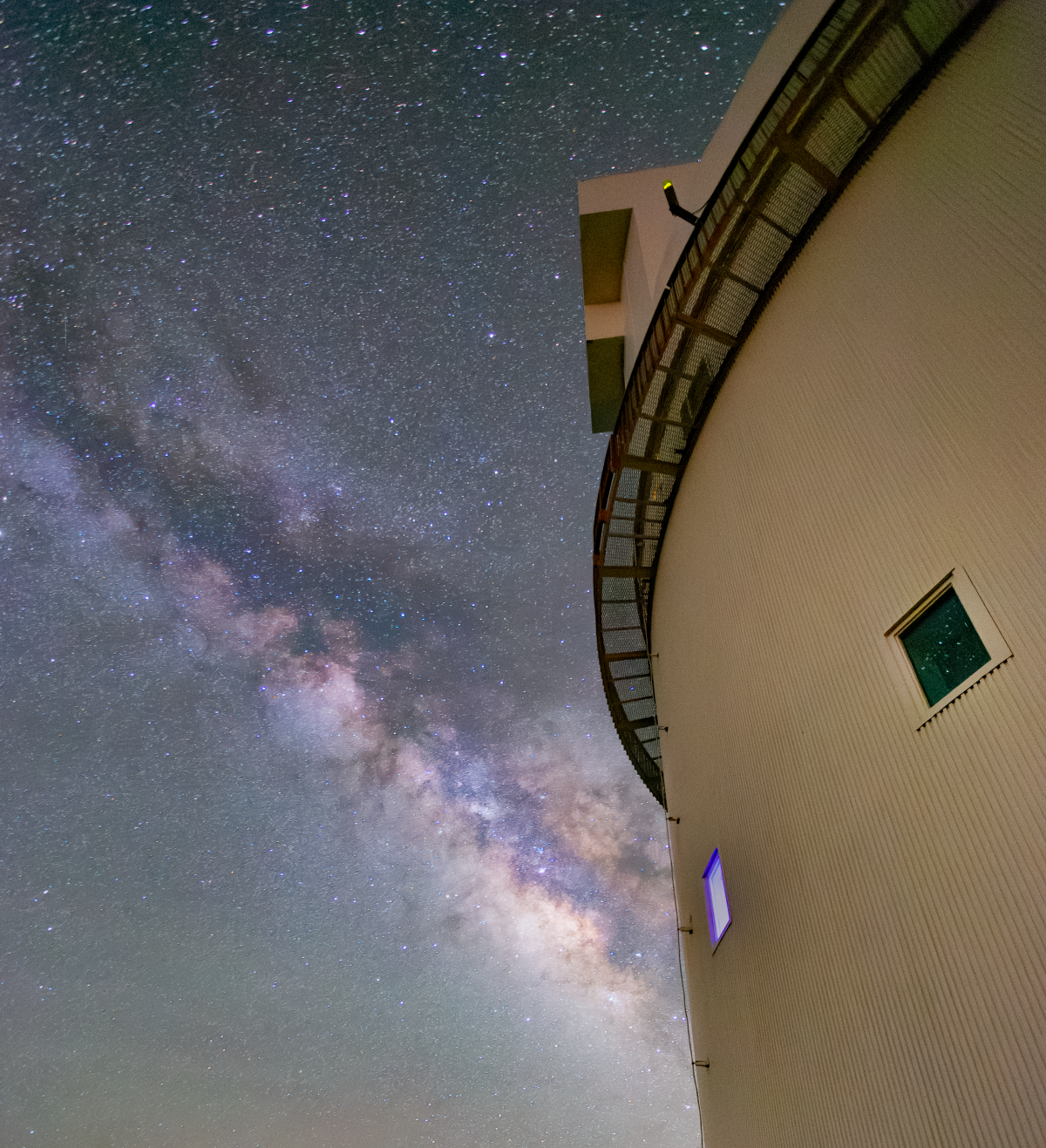
Its location in the valley directly below the research telescope domes created several lighting and design requirements that that are vital to keeping the night skies dark enough for observing. At the same time the facility must safely accommodate the hundreds of visitors that flock to the Observatory's popular Star Parties three nights per week for lectures and "hands-on stargazing." The amphitheater and exterior plazas were designed primarily to accommodate these events.
The materials palette centers on native red sandstone quarried in Pecos, Texas. Dry stacking -- a traditional building method -- was an inspiration for the application of the stone in retaining walls and columns on the building's exterior and its interior. The dry stacked appearance (the process is actually a veneer treatment laid over a structural concrete block core) lends the building a rugged quality that responds to the surrounding mountains and places it comfortably in its dramatic landscape. Smooth, red synthetic stucco elegantly complements the stone work.
The interior is divided into three major sections. The educational section includes a state-of-the-art theater and classroom space for use by visiting school groups. The 2,400 square foot exhibit hall features "Decoding Starlight," an exhibit about spectroscopy and the work of McDonald Observatory that is the main attraction of the facility. Sears & Russell Consultants Limited of Toronto designed the exhibit, working with McDonald Observatory staff. Explus, Inc. of Dulles, Virginia fabricated the exhibit.
The third portion of the Center houses the gift shop and cafe. Red sandstone walls and columns continue to the interiors, which are simply designed using durable materials including concrete floors with granite inlays. Although the interior is primarily windowless (to control lighting levels for exhibits as well as reducing light pollution from interior lights), a narrow band of cut glass placed high on the wall in the gift shop accurately depicts the colors of the Sun's spectrum on the ceiling.
-- END --
For more information contact:
Rhotenberry Wellen Architects
Jim Rhotenberry AIA
915.682.1252
jrr@rwarchitects.com
CYMK Group
Canan Yetmen
512.444.9112
canan@cymkgroup.com
|